Sea Turtles Breaking Records

By Davide Zailo, Research Program Manager, Georgia Sea Turtle Center

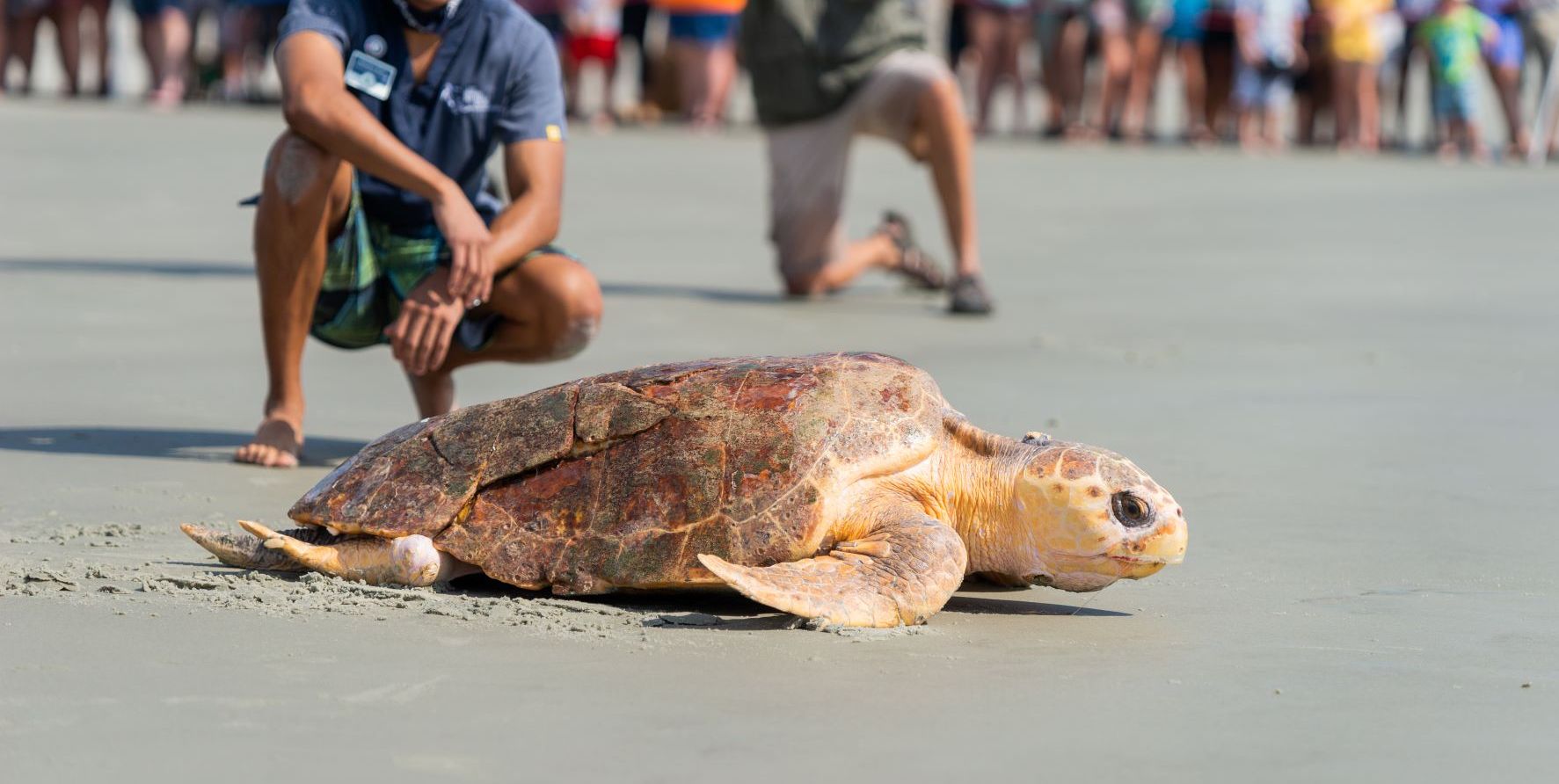
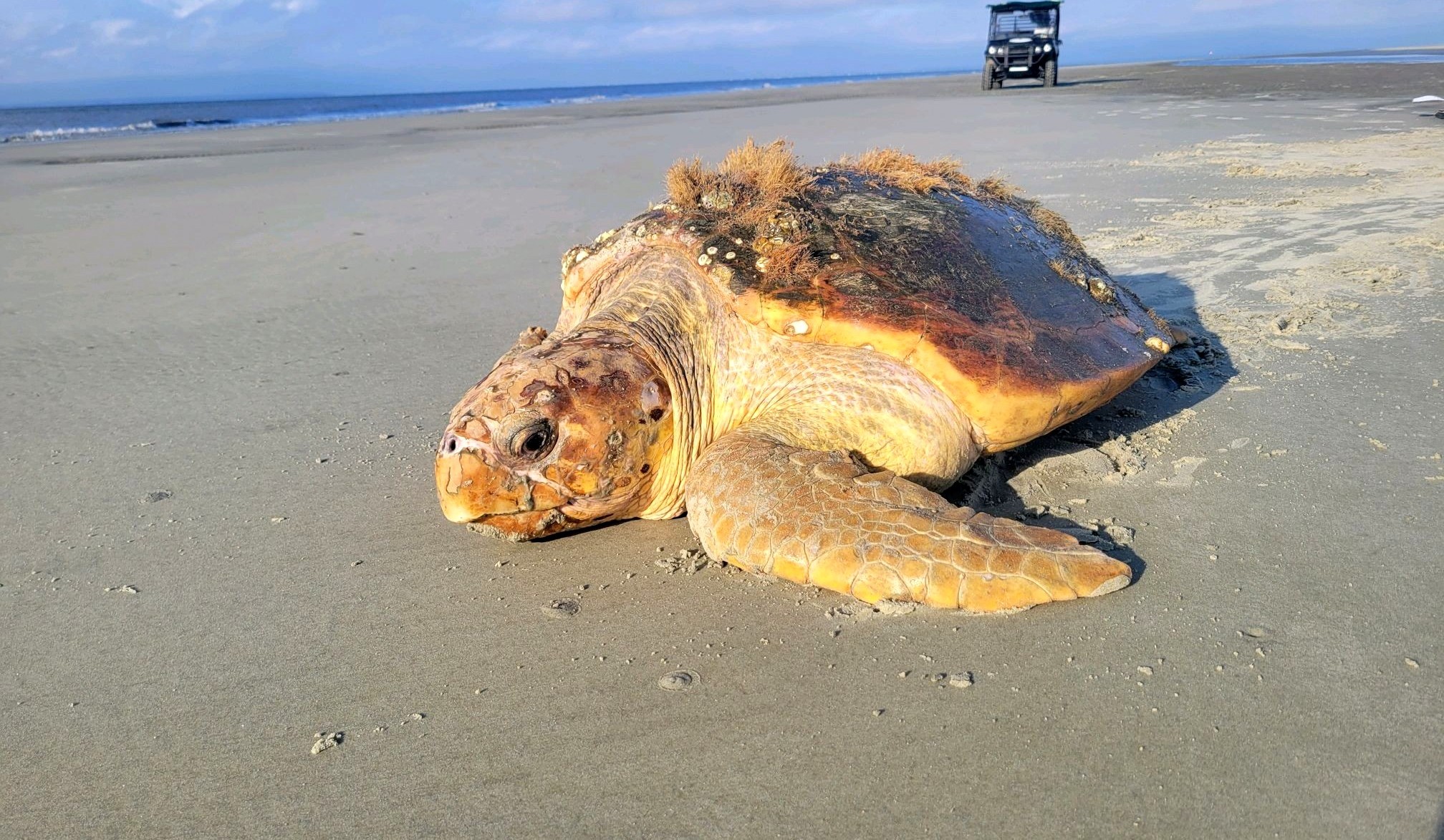
The start of nesting sea-turtle activity began early this year on Jekyll Island. On April 28th, the Georgia Sea Turtle Center’s (GSTC) sea turtle patrol team was notified of mysterious large tracks spotted above the high tide line on Jekyll’s south end. Normally, the team begin its surveys for nesting sea turtles in May. Staff loaded equipment into the beach-ready UTVs, a necessary purchase made possible through funding provided by the Jekyll Island Foundation, and headed to the scene. Indeed, there were tracks left from the flippers and shell of an adult loggerhead sea turtle that had emerged around high tide the night before. She did not nest during this attempt, and it was characterized as a “false crawl”; however, it was a sign of an impending busy nesting season. In fact, Jekyll Island had the earliest recorded 2022 sea turtle nesting season activity for the entire state of Georgia.

From May to the end of October (or until the last known nests have hatched in Georgia), the GSTC Research Team, permitted by GDNR, patrols Jekyll Island’s beaches throughout the night to encounter as many nesting loggerhead sea turtles as possible. These night patrols allow the team to study females directly, collect nest data, and provide unforgettable experiences for guests attending nighttime Education programs. To ensure that nesting is not interrupted, researchers carefully watch emerging turtles from a distance until they start to lay eggs or begin returning to the water in the case of a “false crawl” to begin performing data collection. Every turtle is safely examined, measured, tagged, and have a skin collection taken for genetic analysis according to a flow-chart of data collection priorities. If a sample is not able to be safely collected we will wait and hope to encounter the animal again later in the season.

Each morning at 6 a.m., our Night Patrol team is replaced by a smaller Dawn Patrol team which covers Jekyll’s beaches to perform a daily check of each nest to document its progress throughout incubation and ensure it remains safe from unnecessary predation risk from species such as raccoons and foxes. Five days after hatching, the nest is carefully excavated to assess egg hatching success and collect other information.

The most common nesting sea turtle species, the loggerhead sea turtle (Caretta caretta), can weigh upwards of 300 pounds and lay up to multiple clutches, or nests, of 100+ eggs in a single season. Some turtles will place all their nests on Jekyll Island whereas others will distribute them among multiple islands. Nesting females are at least 30-35 years old and are the drivers of population growth, recovery, and ultimately, persistence. Tallying nests allows researchers to estimate numbers of adult females and whether the loggerhead population is increasing, stable, or declining. This year turned out to be a record-breaking year here on Jekyll, throughout Georgia, and the rest of the southeastern United States. A potential indication that the rewards of conservation and management activities such as protection of nesting sites and reductions in capture and mortality of sea turtles by commercial fishing vessels 30+ years ago are finally becoming apparent. On Jekyll, the island recorded 234 sea turtle nests which produced 21,624 hatchlings. For comparison, in 2004, only 25 nests were counted on Jekyll’s beaches.

These efforts would not be possible without the generous support of the Jekyll Island Foundation and its donors, supporting the native wildlife and building towards a more sustainable future.

To support the ongoing work of the Georgia Sea Turtle Center, click HERE.
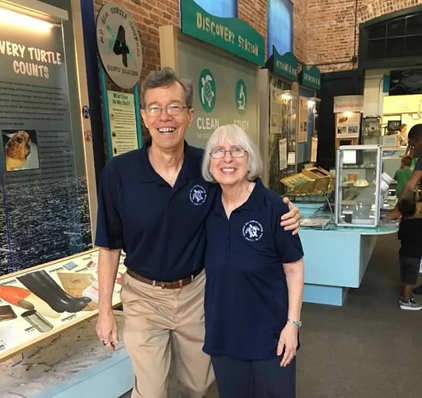
Meet Our Donors: Mike & Joy Cook

Mike and Joy Cook joke that they “almost” don’t want to tell anyone how special Jekyll Island is.

“That lets the secret out,” they said, smiling in unison.

As the now former educators—she a librarian, he a teacher—were contemplating where to sunset after their careers, Joy read something about the Georgia Sea Turtle Center (GSTC), which prompted their first visit to the Island.

“We wanted to do something in retirement that helped animals and the environment,” she said.

Jekyll’s beauty made an indelible impression on these beach-loving Florida transplants and protecting it is especially important to them. “We’re from Miami…and saw what happened there with the skyline covered in skyscrapers,” Mike said.

“Here the moss-covered trees are our skyscrapers,” said Joy, “and even the gas station blends into the landscape.”

Once they bought a house on Jekyll and settled in, they got busy volunteering. “Let me put it this way,” teased Mike, “we’re DINKs (dual income no kids) with cats.” They signed up for a class on how to get involved and found out the GSTC had a virtual education program for youth, which they then supported for several years. They also got to know the park ranger and helped with some of nature programs such as Gatorology, the history, biology and conservation efforts related to the American Alligator, and Ranger Walks, a bald eagle nest viewing tour.

These days, in addition to any volunteer activities, they can often be found contributing to the Golden Isle’s edutainment through their Native American flute performances.

“We’ve been playing for about 20 years,” said Mike. “Before that, I’d never played an instrument.” It was a trip out west that first introduced them to the unique musical genre. They started to build a CD collection at their previous home in Florida, went to a dedicated school for the instrument in North Carolina, and eventually brought their talents with them to the Georgia coast.

“We like to share the idea of the flute circle, which is to help one another,” said Joy, speaking about their opportunities to perform for people on and off the Island.

That esprit de corps is also on display several times a week while they lead a class for practitioners of Qigong, an exercise flow of coordinated body-posturing along with breathing and meditation that supports health and spirituality.

When asked what they hope for Jekyll’s future, both agree that striking the right balance between what humans want and the environment needs has to be an ongoing commitment.

“The (Jekyll Island) Foundation does a good job [assisting with funding for] restoration projects in the Historic District and around the Island, [that help to] keep things preserved,” said Mike.

When ‘selling’ Island visits to family and friends, they make sure to mention how “laid back and comfortable” the atmosphere is, how the beaches aren’t as crowded as some of the other coastal destinations, and, of course, all the attractions—the GSTC, Mosaic, Jekyll Island Museum, the great restaurants, fishing off the pier, Driftwood Beach (“a must see”), Horton Pond—as well as the trolley tours.

“Even as residents we love to go on the trolley tours,” said Joy. “Depending on the time of year, there’s always something new to learn about the Island.”

They are especially fond of the Christmas holidays. “The Island events are a lot of fun,” Mike said. “We’ve decorated the (golf) cart and driven in the parade around the Island looking at all the light displays.”

For Joy, the best light displays Jekyll has to offer come twice a day. “A dawn and at dusk,” she offers, “the colors of the sky are just breathtaking.”

Meet Our Donors: David & Julie Fisher

David and Julie Fisher have travelled all over the world. And when you ask them to name their favorite place, they answer—in unison—without hesitation: Jekyll Island.

“When we drive over the bridge, my heart rate slows down, my pulse slows down, I breathe easier,” Julie said.

And that’s really saying something given the pace she and David keep due to their very successful architectural photography business.

“We started the business before we retired,” David said, “back then it was more of a hobby. But now it’s a way of life.” He laughed, “We’re always on the go. We even live out of suitcases at home!”

Laughing and travelling are major themes with this couple who met at David’s 50th birthday party and started dating shortly thereafter. “When I gave her a ring, she said she wasn’t ready to get married yet,” recalls David. “So, I told her to let me know when she was.”

Julie did just that one night by spelling out ‘will you marry me’ in candles, and David jokes that he answered, “No way…(pause for dramatic effect)…can I turn down an offer like that from you.”

Though neither is a native Georgian, they both had individual experiences with Jekyll before buying a place together in the early 2000s.

“During the summer, it has a resort feel,” said David. “Then in the winter,” Julie adds, “the snowbirds come down and it feels more like home.” And while their primary residence is in Stone Mountain, they visit Jekyll about once a month and suspect they might have more friends on the Island than in the city.

“That’s one of the things we love about Jekyll,” said Julie. “There are just so many wonderful people.”

The people and the place itself seem to hold endless fascination for this duo who have taken—and donated—thousands of pictures capturing the Island’s unique geography, wildlife, and lifestyle.

“The landscaping is remarkable,” said David. “And we love that Jekyll is still being developed but in a responsible way.”

That, he said, is in large part due to the tenacity and vision of the Jekyll Island Authority Board of Directors and its Executive Director Jones Hooks. “There were—are—a lot of hurdles, but he leads through them quite well.”

David and Julie also credit Jekyll Island Foundation Executive Director Dion Davis with getting them engaged in ways that don’t always involve their camera. “She has a love for Jekyll Island that you can feel, and she has the ability to inspire that same love in others,” said David.

“We’re just so impressed with what the Foundation is doing,” said Julie, who acknowledges the work of the Foundation to raise funds to support several island initiatives. “The Mosaic [Jekyll Island Museum], the Georgia Sea Turtle Center, Horton Pond, the historic homes…all of these things keep Jekyll special.”

Indeed, they feel the entire Georgia coastline is one of our country’s best kept secrets. “We use a plane and love to take people up to show them just how beautiful this area is,” said David.

They also believe that continuing to examine the need for revitalization—balancing that with critical versus non-critical utilization—is important. “Especially because of the aging homes [on Jekyll], our infrastructure definitely needs attention,” said David.

When asked what they hope for the Island’s future, David jokes, “We have some mighty fine restaurants, but what Jekyll needs is a good barbeque joint.”

There’s a smile behind Julie’s answer as well. “We hope more people experience Jekyll. We love to introduce new people to the Island. And every time we go, we discover something new.”

“In fact,” said David, “every time we leave, we always look at each other and say ‘that was the best trip ever!’”

Beautiful Solutions to Pesky Problems

by Cliff Gawron, JIA Director of Landscape and Planning

Picture yourself in one of Jekyll Island’s most recognizable spaces, where North Beachview Drive passes the historic mini-golf course near the intersection with Shell Road. This area falls in the middle of a zone of beachfront that provides parking, facilities, and access for Jekyll’s most visited beaches. To the north and south of this point, most of the parking areas and park spaces have been re-designed and beautified with predominantly native plant landscaping over the past 15 years as Jekyll Island has been revitalized.

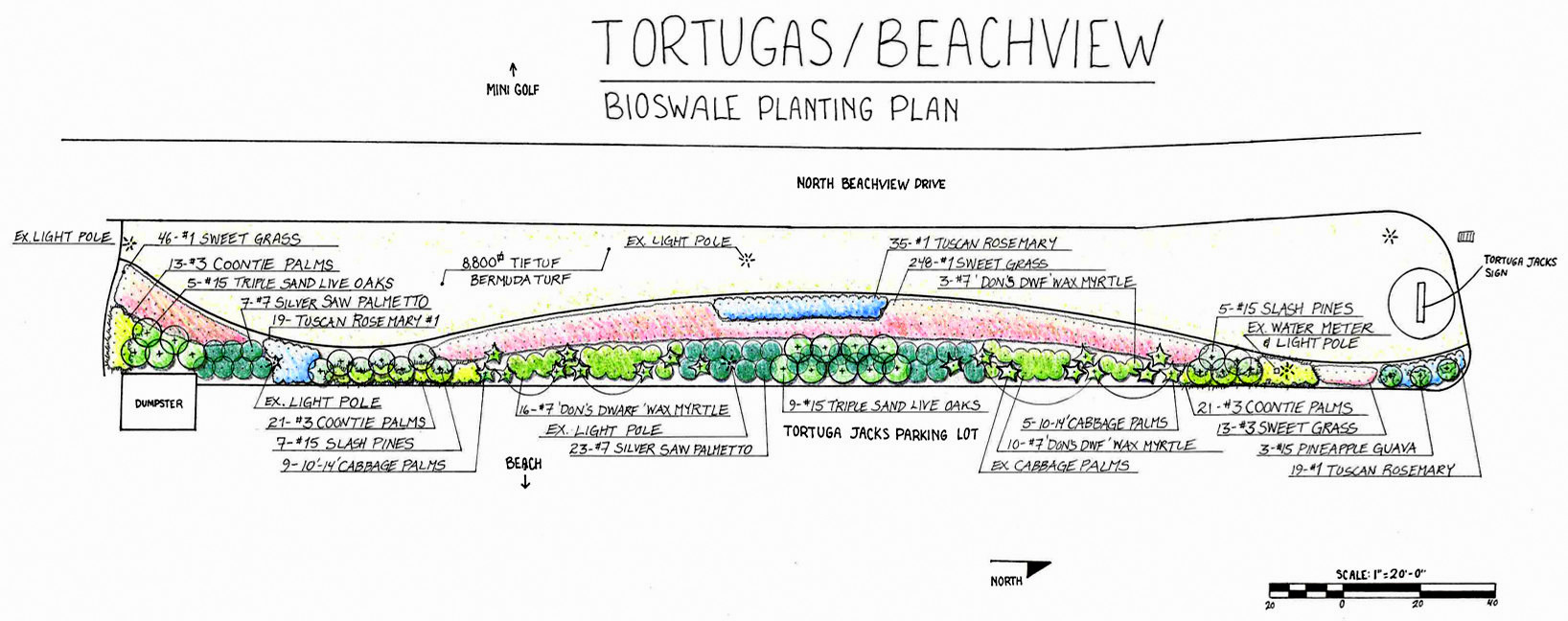
One glaring exception, however, has been the public parking lot adjacent to Tortuga Jacks restaurant, directly across Beachview Drive from Jekyll Island Mini Golf. The existing parking lot is in full view for passing drivers with no screening vegetation. The existing strip of land that separates the parking lot from Beachview Drive is a relatively flat expanse of scraggly Bahia grass, weeds, and just a few cabbage palms. In addition to being a bit of an eye sore by comparison with the rest of Jekyll’s beachfront landscaping, the site has a functional problem as well. On Jekyll, the old adage “when it rains it pours” is often quite literally the case. And when it’s pouring, the vast majority of stormwater runoff from the south side of the Tortuga Jacks restaurant and the parking lot has no catchment and flows across Beachview Drive right into the mini golf facility where the water itself can cause problems along with the debris it carries with it.

Fortunately, the Jekyll Island Foundation partnering with the Jekyll Island Authority to put donor support to work, is a proven recipe for problem solving. To address this particular problem, a landscape architecture intern from the University of Georgia, worked alongside the Jekyll Island Authority’s Director of Landscape and Planning to create a stormwater detention “bioswale” and planting plan. The design will address the storm water runoff disfunction by re-grading the area to create a swale that will be partially planted with a mix of predominately native tree, shrub, and grass species to aesthetically complement the landscape design of the adjacent Great Dunes Beach Park. Fresh turf will be brought in for the road shoulder to maintain open sight lines for traffic safety and to serve as the aesthetic foreground framing the plantings behind. Once the installation matures, the parking lot will become hidden behind a “green screen” of lush vegetation. A meandering strip of sweetgrass, an iconic native coastal grass, will be a highlight and will make for a dramatic display of misty pink seed heads come late October.

The bioswale will occupy nearly 20% of the total drainage area, large enough to capture all the runoff from the parking lot in all but the most intense downpours. During a rainstorm, the feature will initially fill with storm water, creating a temporary shallow pond which will percolate through the plants, roots, and sandy soils to return to the groundwater table.

This project is set to break ground this Fall after generous support from Foundation donors. Learn more about future Foundation initiatives like this one that you can be a part of supporting: https://jekyllislandfoundation.org/give/initiatives/

Crawling into Nesting Season

With May 1st marking the official start of turtle nesting season along the Georgia coast, the Georgia Sea Turtle Center (GSTC) is already busy patrolling Jekyll Island’s causeway for diamondback terrapins and beaches for nesting sea turtles.

DIAMONDBACK TERRAPINS

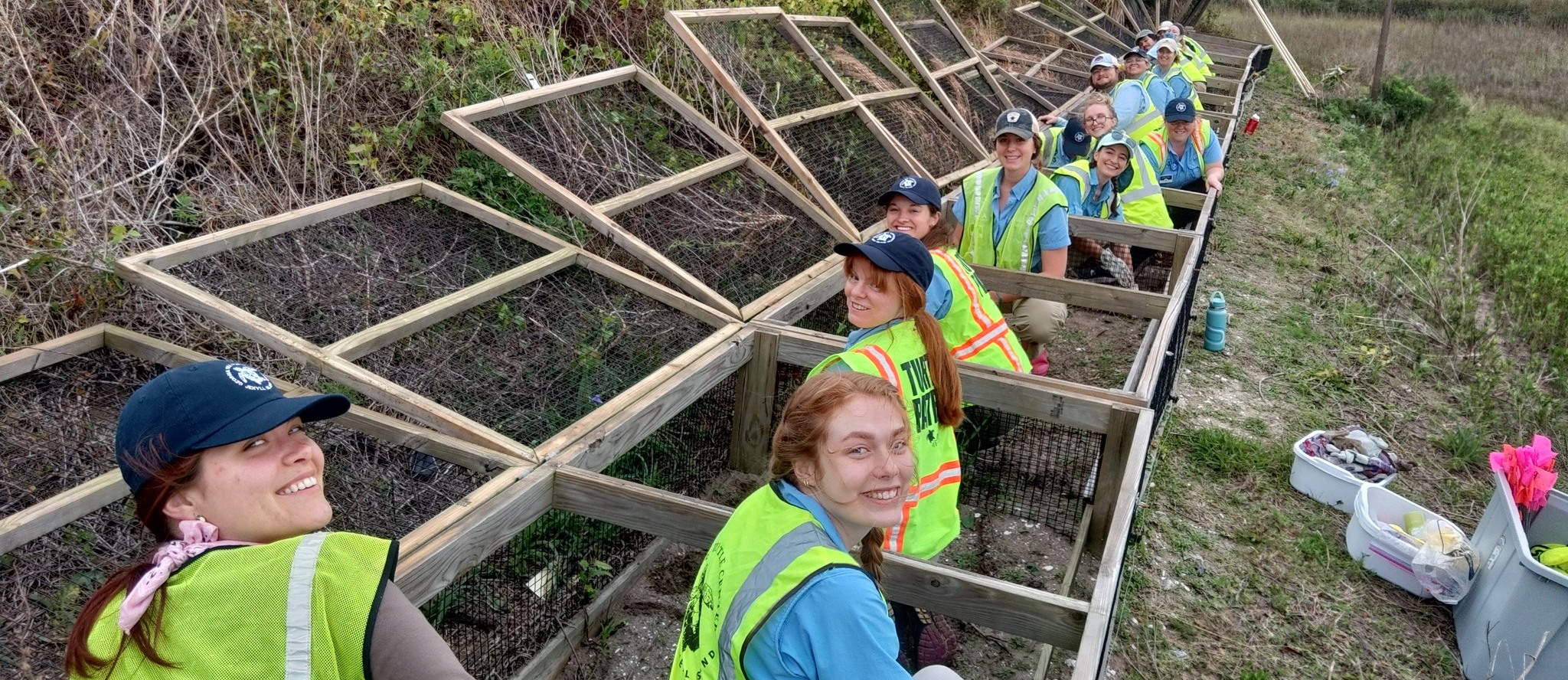
The GSTC and Jekyll Island Foundation (JIF) donors have partnered for nearly 10 years in diamondback terrapin rescue, research, and implementation of various protection methods during nesting season. These efforts focus on decreasing terrapin road mortality rates. The GSTC’s diamondback terrapin patrol team routinely drive the causeway in search of nesting mamas crossing the road and inspecting nest boxes for similar signs. Recently, JIF and ANIMEX, a new partner, donated fencing materials that were installed on either side of the entrance to Jekyll’s causeway, adding one more component used to help decrease terrapin roadway mortality rates.

SEA TURTLES

And along the beaches these ancient reptiles emerge from the ocean to begin nesting as early as May. Fertile turtles crawl slowly to the dunes, enter a trance as their eggs drop into the sand, laying over 100 ping-pong ball-like eggs under the cover of darkness. Then, the GSTC Sea Turtle Patrol Team jumps into action gathering measurements, identification information, and ensuring the nest is protected from predators and human disturbances. The data collected helps inform local, regional, and international conservation efforts.

Jekyll Island visitors hoping to catch a glimpse of this once-in-a-lifetime experience can join GSTC educators under the stars by registering for an Evening Turtle Walk or Ride with Night Patrol on select nights in June and July. There’s no guarantee a nesting turtle will appear, but the evening promises to make the night memorable!

The GSTC hospital and patrol teams continue to work diligently to rescue and rehabilitate these gentler creatures. Investments of any size are welcome and appreciate. GIVE NOW.

Here before you know it!

By Ben Carswell, JIA Director of Conservation and Sustainability

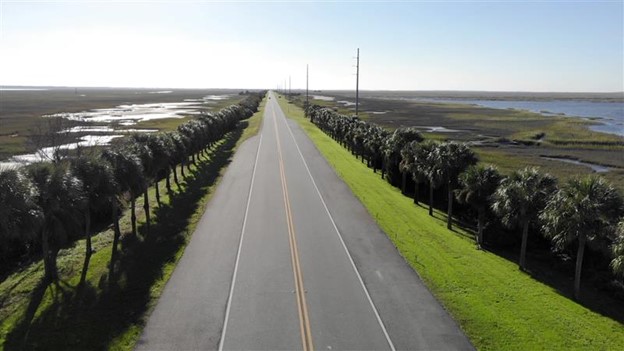
This year, 2022, marks the 75th anniversary of the establishment of Jekyll Island State Park. And yet, many visitors to Jekyll Island never know that this unique place contains more than just the Island itself. In fact, by the time one slows to make the turn from Highway 17 onto the Downing Musgrove Causeway, they have already crossed into its welcoming boundaries. The six miles of causeway to follow offers expansive views across nearly 7,000 acres of tidal marshlands brimming with biological diversity and dotted with forested marsh hammock isle-lets, all of which lies within the Park’s boundary. This lesser-known side of Jekyll Island, known as the “back-barrier marshes” covers more area than the Island itself and supports over half of the Wildlife Priority Species identified in the Jekyll Island Conservation Plan.

Like its State Park boundary, the work of the Jekyll Island Foundation doesn’t stop at the foot of the bridge onto the Island. The Jekyll Island Conservation Plan sets forth the following management priorities for the Causeway and back-barrier marshes:

  1. Minimize vehicle strike mortality of Wildlife Priority Species
  2. Reduce immigration of exotic-invasive plants and animals
  3. Prevent loss of elevation due to erosion or compaction of soils surrounding the Causeway
  4. Promote habitat diversity
  5. Maintain a safe and enjoyable experience for drivers and cyclists that affords opportunities to appreciate the natural beauty and abundance of wildlife evident upon arriving

The excellent work spearheaded by the Georgia Sea Turtle Center to better understand and protect Diamondback Terrapins along the Causeway is a shining example for how Foundation dollars can make a difference towards achieving these goals. Another For the Record piece this month highlights the latest big step in efforts to help terrapins avoid roadway hazards. And coming soon, thanks to generous donor support through the Foundation, the Jekyll Island Authority will be able to add a mile of new native wildflower meadow along the east end of the Causeway, making arrival to the Island even more welcoming, not just for human visitors, but for pollinating bees and butterflies as well.

The Causeway and back-barrier marshes are a truly special part of the Jekyll Island experience that connects the Island with the broader community of Brunswick and the Golden Isles, mutually strengthening the well-being of many. The next time you turn onto the Jekyll Island Causeway, take your time, breath in the fresh air, brake for terrapins, and think about giving to the Jekyll Island Foundation. Your contributions go a long way towards empowering better stewardship of every corner of Jekyll Island State Park.   

It’s Turtle Crawl, Ya’ll!

by Alexa Hawkins, JIA Director of Marketing & Communications

Join other turtle-lovers at the annual Jekyll Island Turtle Crawl! Registration is underway for this fan-favorite event celebrating the start of sea turtle nesting season on the Georgia coast. Registrations from the Turtle Crawl races benefits the life-saving work of the Georgia Sea Turtle Center on behalf of the Jekyll Island Foundation.

Returning to the road Saturday, April 30, participants can run the beachside 5K or 10K races and receive a commemorative t-shirt. Those who place at the top of their category will also receive a 2022 race metal. Families looking to participate together can join in the one-kilometer Fun Run and pose for a photo with the Center’s official mascot, Scute C. Turtle, and friends. For those who want to support the Georgia Sea Turtle Center from afar, or simply sleep in and still get a t-shirt, registrants can join the race through a virtual Ghost Crawler option. Following the races, join Georgia Sea Turtle Center staff for Shell-e-brate, the Center’s family-friendly all-day event featuring educational activities and visits with staff and animal ambassadors.

Turtle Crawl was created in 2003 as a fundraiser for the Georgia Sea Turtle Center which, with more than a decade in operation, has provided care for more than 3,000 patients, including a variety of sea turtle species and other coastal wildlife. Turtle Crawl participants have raised more than $100,000 to help save sea turtles, with more than $24,000 raised in 2021!

Become a sea turtle ambassador and race for a cause at this one-of-a-kind event supporting sea turtle conservation. Be sure to register soon as race registrations increase April 10 and online registration closed April 27!

A Year of Progress at Hollybourne Cottage

by Allison Dupuis, JIA Museum Educator

It’s hard to miss Hollybourne Cottage on a trip through the Historic District. The Cottage’s unique structure, enormous side porch, and tabby exterior attract curious visitors every day. These same features speak to the Maurice family’s love for Hollybourne and their devotion to preservation on Jekyll Island. Charles and Charlotte Maurice spearheaded the first rehabilitation of Horton House and the Dubignon cemetery, two other tabby structures on the island, in 1898. Even after Charles’ and Charlotte’s deaths, their children, especially their daughters Marion and Margaret, maintained their devotion to Jekyll Island and spent every winter season at Hollybourne until 1942.

Today, Hollybourne Cottage is a fascinating preservation work in progress. Throughout the past year, Jekyll Island Authority Historic Preservationist Taylor Davis and a host of volunteers have worked to make important improvements to the cottage’s exterior and interior features.

The most visible project from the outside is Hollybourne’s roof—the cottage’s original shingles were made of old growth cypress, and the team recently undertook a major roof preservation project. Hollybourne gained new, high-quality cedar shingles that are fire, rot, and bug resistant, aiding in the future preservation of the cottage.

Several interior features were upgraded as well. A stove hood in the service wing of the house had been removed from the building for eight years for stabilization and paint sampling to retain its original color. Volunteers rehung this stove hood in early 2022, along with the original basement door, which also underwent significant preservation.

In the dining room, the team continues work on the ceiling, including new lath (wooden strips) which will be left exposed. The ceiling project, along with several other projects in the dining room, aim to return the room to an interpretable level while leaving “windows to the past” to highlight construction methods.

Hollybourne Cottage’s story is ongoing. The most recent issue of 31•81, the Magazine of Jekyll Island, highlighted one of the cottage’s remarkable preservation stories. As Preservation Month approaches in May, make sure to visit Mosaic, Jekyll Island Museum for opportunities to explore Hollybourne’s unique place in Jekyll Island history or click HERE to participate in the restoration of this beautiful piece of history.

Providing for Wildlife at Horton Pond

by Yank Moore, JIA Natural Resources Manager

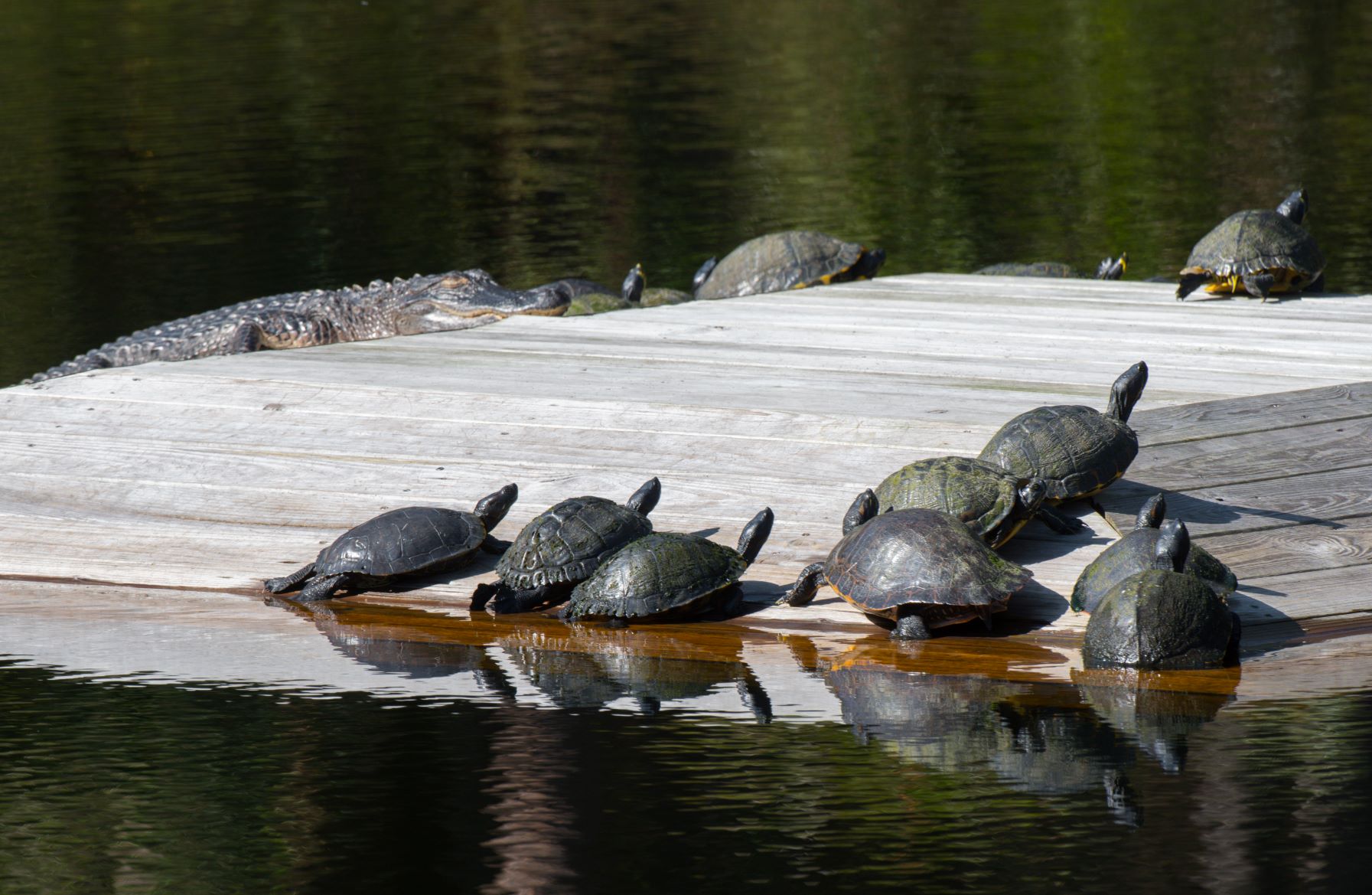
Horton Pond has become a destination for many guests and their families while visiting Jekyll. The wildlife viewing area, basking platform, and nature trail funded by the Jekyll Island Foundation allows visitors a chance to experience the American Alligator, Night Herons, Wood Ducks, and various other wildlife in their natural habitat. The JIA Conservation team’s goal for this project has been to provide a space for people to enjoy nature while improving habitat value for wildlife, increase educational opportunities, and encourage guests to become better stewards of the environment.

Beyond what is visible to the public, the JIA’s Conservation Department manages Horton Pond to be as productive and natural as possible without using harsh chemicals or other invasive means of control. Instead, sterile grass carp were introduced to eat the underwater aquatic plants that would normally take herbicide to control, and a recently installed solar aeration system to supply much needed oxygen for fish and other underwater wildlife to flourish.

Recently another upgrade was made to the pond. Funded by generous donors of the Jekyll Island Foundation, a solar aeration system was installed to not only provide oxygen, but enhance water quality, limit excess nutrients, and keep algae from causing issues for wildlife. Horton Pond is man-made and has no natural water input like a stream or river so it must rely on surface runoff and groundwater. Without management this pond could suffer from a stagnation effect and without the aeration system the pond could go through cycles of bad health. The system installed at Horton Pond is powered completely by a solar panel harnessing the power of the sun and is efficient enough with timers and controls to run even on cloudy days.

To see the system in action, visit Horton Pond early in the mornings when aeration system is on and when the pond needs it the most.